• Home
  • Project
    Introduction
    • Introduction
    • Background and Motivation
    • What is a Good Timetable?
    • Project Aims and Scope
  • Graph Data
    Model
    • Graph vs Relational Data Models
    • Graph Data Model for Timetabling
    • Early Insights
    • Model Expansion
    • Graphing Time
  • Data
    Pipeline
    • ETL Overview
    • Approach
    • Configuration and Logging
    • Extract
    • Transform
    • Google Drive Load
    • Neo4j Load
    • Reflection
  • Timetable
    Metrics
    • Timetable Metrics
    • Metric Aggregations
    • Implementing Metrics
    • TQI Summary
  • Final
    Thoughts
  • Appendices
    & Extras
    • Appendix Table of Contents
    • References
    • Acknowledgements
  • Word
  1. Appendices
  2. ETL Summary and Code
  3. ETL Summary
  • Home
  • Project Introduction
    • Introduction
    • Background and Motivation
    • What is a Good Timetable?
    • Project Aims and Scope
  • Graph Data Model
    • Graph vs Relational Data Models
    • Graph Data Model for Timetabling
    • Early Insights
    • Model Expansion
    • Graphing Time
  • Data Pipeline
    • ETL Overview
    • Approach
    • Configuration and Logging
    • Extract
    • Transform
    • Google Drive Load
    • Neo4j Load
    • Reflection
  • Timetable Metrics
    • Timetable Metrics
    • Metric Aggregations
    • Implementing Metrics
    • TQI Summary
  • Final Thoughts
  • Appendices
    • Random Graph Generator
    • Technology Stack
    • Configuration
    • Anonymisation
    • ETL Summary and Code
      • ETL Summary
      • ETL Code
      • Config and Misc
      • Extract-SQL
      • Extract
      • Google Drive Load
      • Transform
      • Neo4j Load
    • Neo4j & Cypher Code
      • Cypher Queries
      • Creating Nodes and Relationships
      • Deleting Nodes and Relationships
      • General Queries
      • Count Queries
      • Hard (timetabling) Constraints
      • Student Clashes
      • Soft Constraints
      • Rooms and Spaces
      • Perspectives
      • Blue Skies Opportunities
  • Supervision
    • Supervision
    • Notes Example 1
    • Notes Example 2
    • Notes Example 3
  • References
  • Acknowledgements
  1. Appendices
  2. ETL Summary and Code
  3. ETL Summary

E: ETL Summary

For the proof-of-concept, the following programmes and associated data (students, staff, modules, activities, rooms, etc.) were extracted from the source system and transformed before being loaded into a Neo4j cloud instance.

The table below summarises the time taken for each programme.

pos level hostkey count extract & process gdrive neo4j
Artificial Intelligence PG I400 16 26.8s 26.1s 2m 50.6s
Data Science PG INB112 206 57.6s 26.5s 1m 35.1s
Mathematics UG G90D 103 38.8s 25.5s 6m 12.9s
Computer Science UG I10J 431 1m 9.8s 24.1s 11m 16.1s
Computer Science UG G500 45 30s 24.4s 2m 9.5s
Cyber Security and Digital Forensics UG G4H4 271 57.4s 51.9s 6m 36.3s
Cyber Security PG I900 216 45.7s 25.9s 3m 7.5s
Information Management PG P110 42 17.2s 25.8s 1m 35.1s
Information Technology PG G56A12 174 28.3s 25.8s 2m 22.3s

The largest programme (Computer Science) took just over 1 minute to extract and process and 11 minutes to load into Neo4j. The Google Load consistently took ~25 seconds regardless of file sizes.
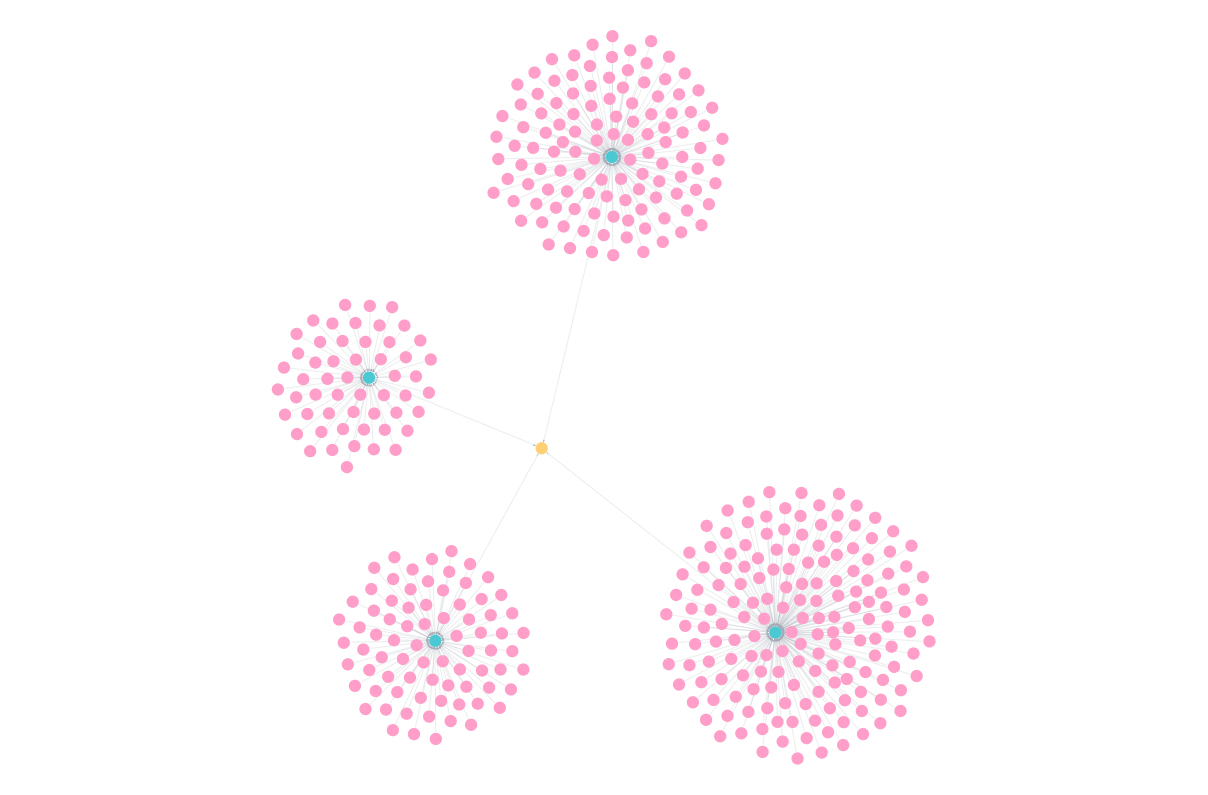
Computer Science (I10J) - Department-Programme-Students

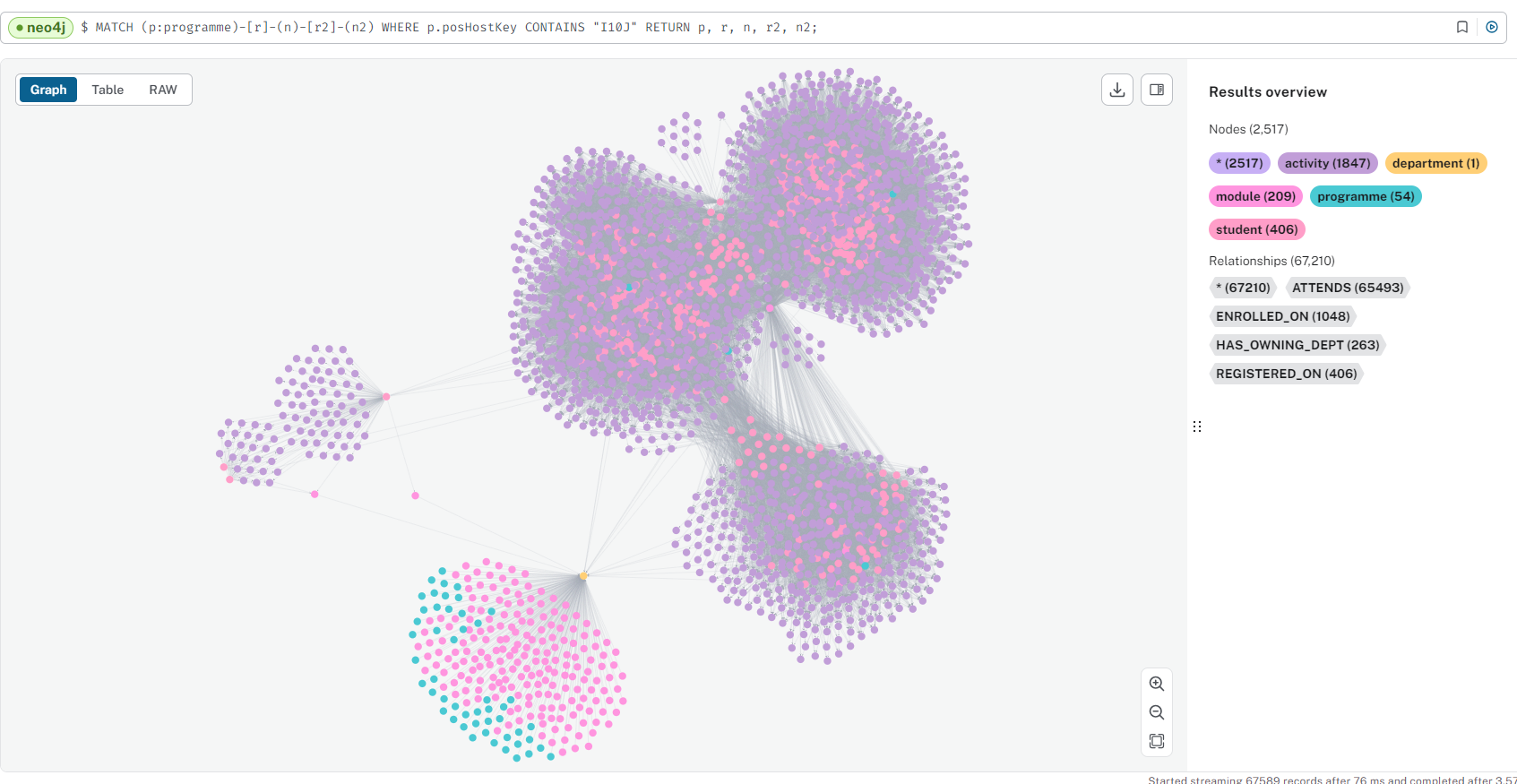
Computer Science (I10J) - Department-Programme-Modules

However, the current graph model creates a significant amount of relationships between nodes:

node/relationship count
programme (n) 4
department (n) 1
hasOwningDept (r) 4
student (n) 413
registeredOn (r) 413
module (n) 11
enrolledOn (r) 1048
activity (n) 1847
attends (r) 65493
staff (n) 23
teaches (r) 538
room (n) 32
occupies (r) 462
activityType (n) 15
hasType (r) 1847
Anonymisation
ETL Code

Copyright 2024, Petter Lövehagen


Built with Quarto