What is a “good” timetable?
One of the most challenging aspects of university timetabling is defining what constitutes a “good” timetable. Despite best efforts, it is virtually impossible to deliver universal satisfaction from a university timetable. The quality of a timetable is inherently subjective and varies among stakeholders depending on their preferences and the demands on their time.
Based on surveys across various institutions, students typically prioritise (Dowland, 2018; Norman, 2022):
- A clash-free timetable
- Early release of timetables
- Clear and accurate information
- Full-year timetable availability
- Minimal changes after publication
- Effective communication of any changes
- Balanced distribution of classes
The above are easy-to-measure deliverables but they do not address what a ‘good’ timetable should look like; individual stakeholders often have conflicting priorities:
- Students may prefer learning times that align with their personal commitments (e.g. part-time employment or travel)
- Academic staff may prefer teaching times that align with their research or personal commitments.
- Administrators might focus on efficient resource utilisation and institutional sustainability.
- Organisational units may have specific needs for specialised rooms or equipment.
This divergence in preferences and the complex interplay of constraints make it challenging to define and achieve a universally “good” timetable (Lindahl et al., 2018). It is this complexity that sets the stage for this project.
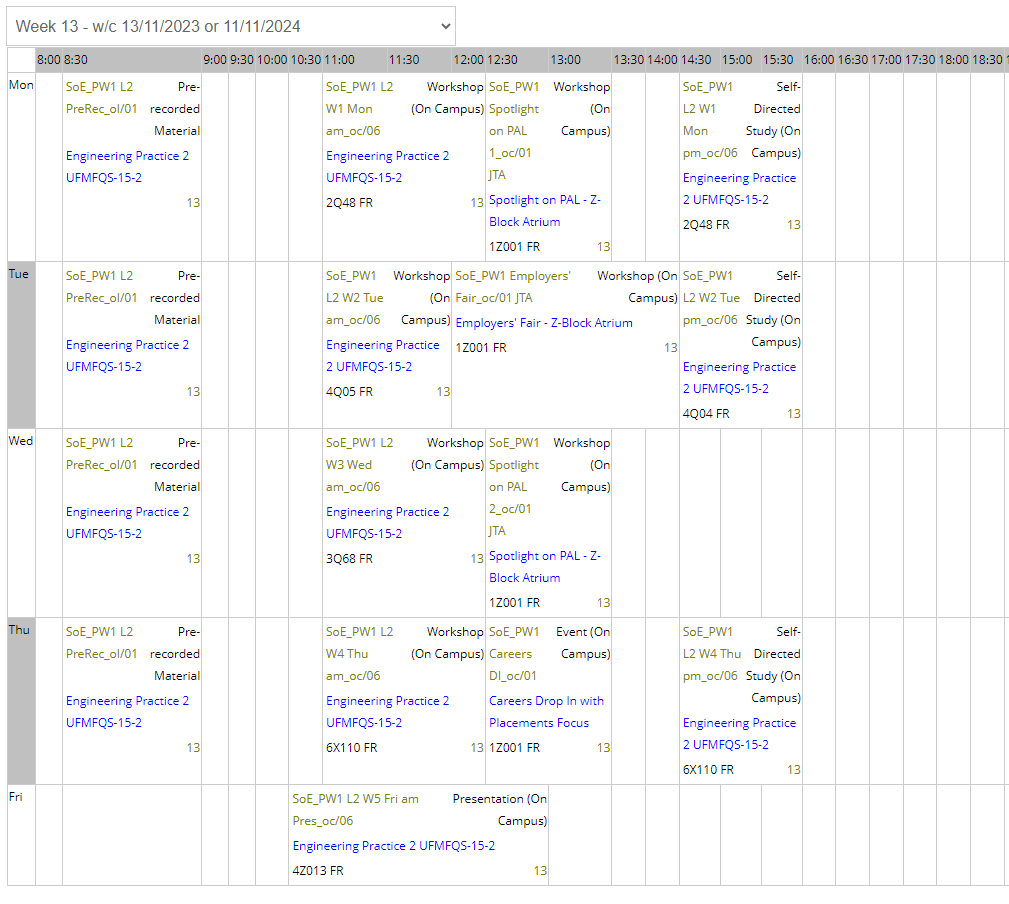
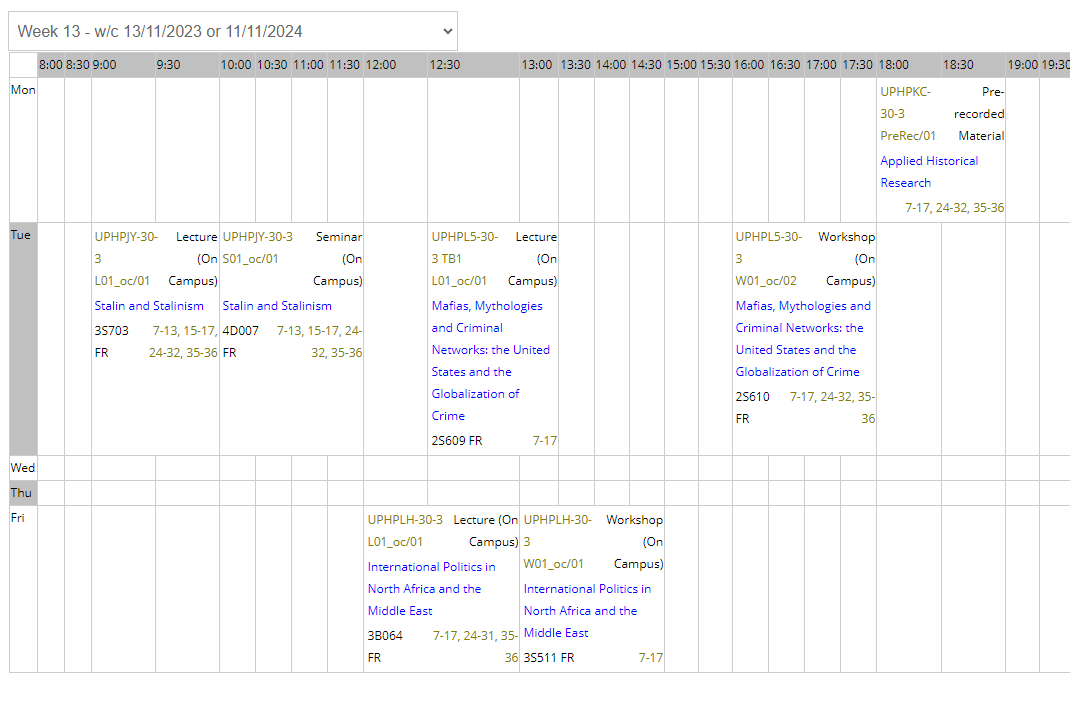
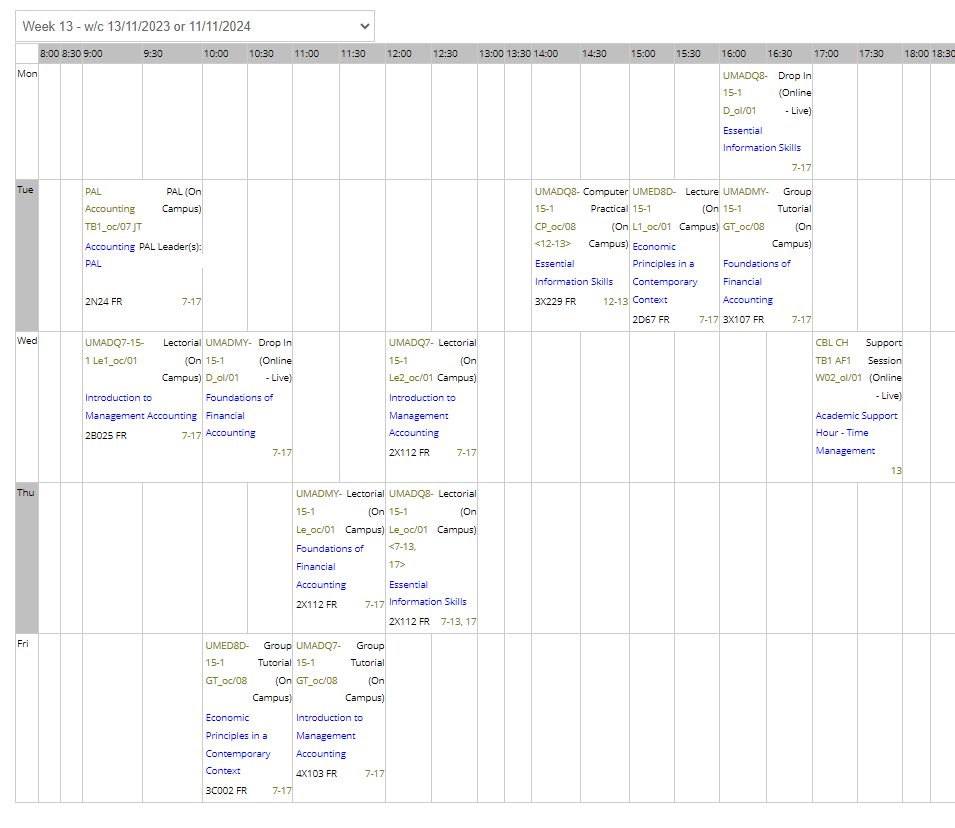
Consider these timetables:
- The first timetable is evenly spread over five days.
- The second timetable has two days free of activities.
- The third timetable has activities on five days, with gaps.
Which timetable is better? Is any of them ‘good’? The answer is it depends! or none of them!
(Click to enlarge)